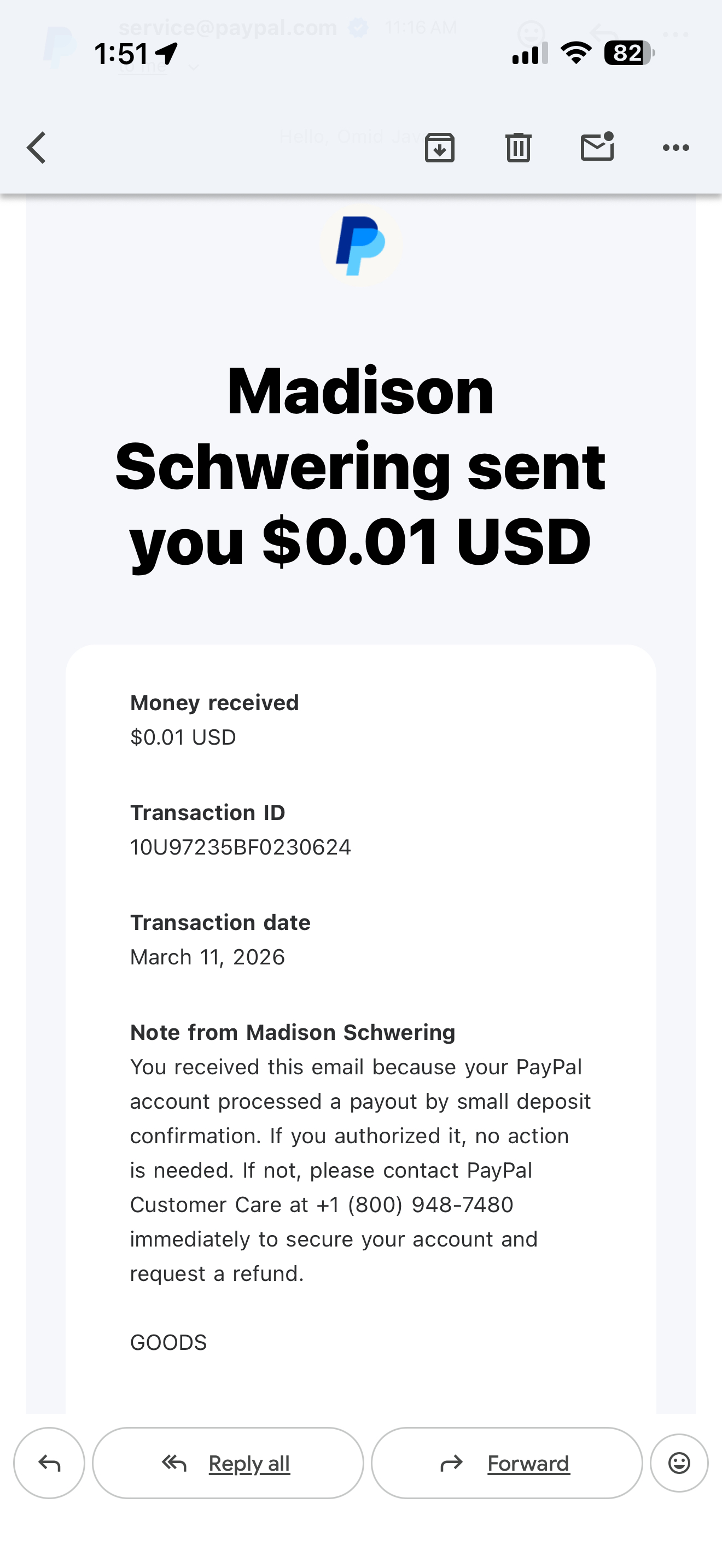
A recent PayPal scam email shows a $0.01 “test” deposit from someone named “Madison Schwering.”
Hidden inside the message is a phone number claiming to be PayPal Customer Care: +1 800-948-7480
Scammers answer calls by saying, “this is PayPal’s customer service.”
This scheme is known as PayPal’s “Penny Scam.”
If you receive a similar email: Do not call the number, do not click any links, and report it as phishing directly through your PayPal account settings.
This PayPal 800-948-7480 number is NOT PayPal.
The message tries to trick people into calling the number so scammers can gain access to their PayPal account, email, or computer. Houston residents and businesses should ignore this message completely and never call the numbers listed inside suspicious emails.
Below is exactly how this scam works and how to protect yourself.
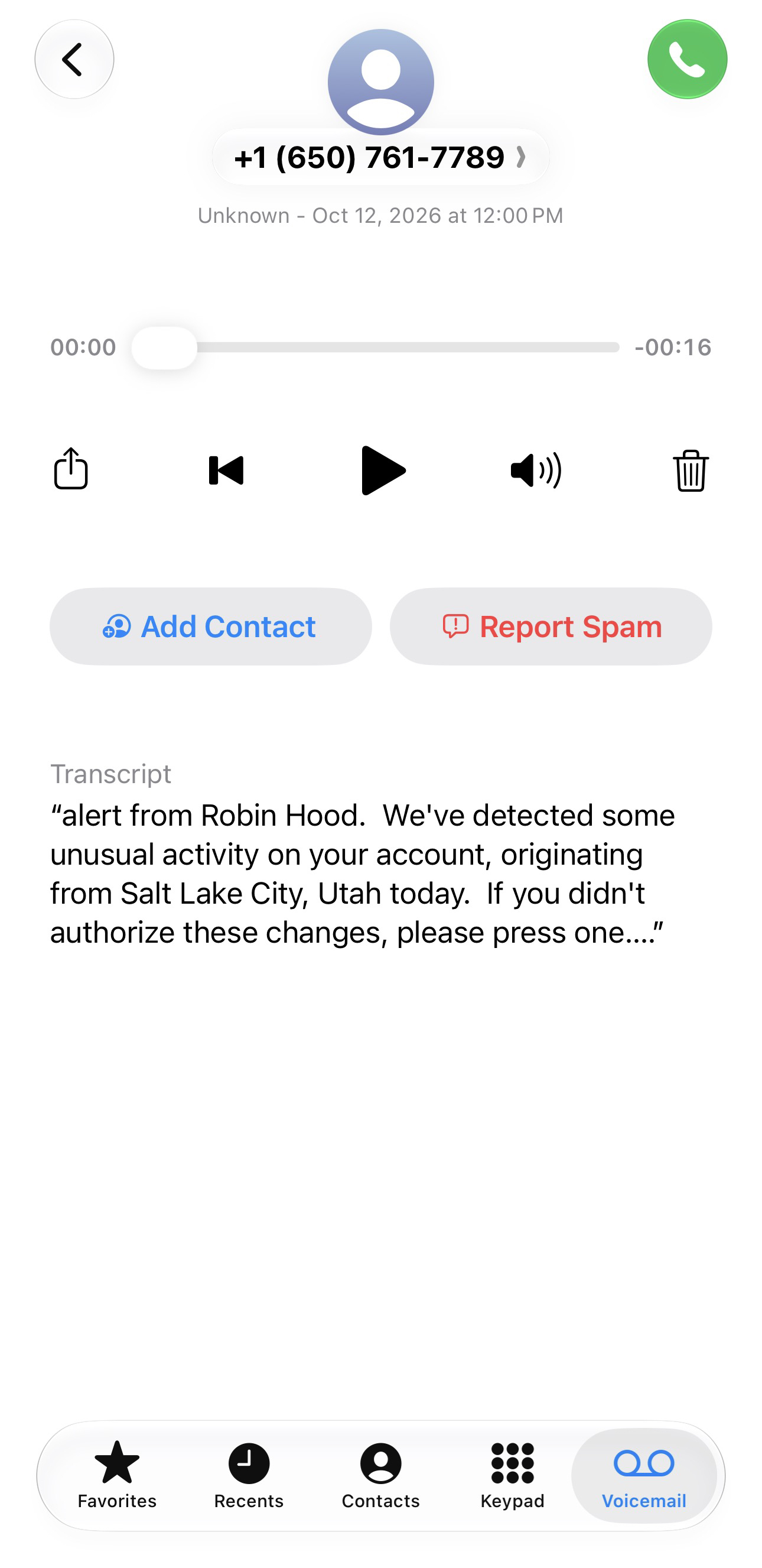
PayPal Penny Scam: +1 800-948-7480 Alert‼️🚨
The scam email looks like a normal PayPal notification. It claims someone sent you a small payment—usually $0.01, and includes a message saying you should call PayPal Customer Care if you did not authorize the transaction.
What to do if you get this: Do not call, do not click links, and report it as phishing in your PayPal account settings.
Example message:
“Note from Madison Schwering: You received this email because your PayPal account processed a payment you did not authorize. PayPal Customer Care at +1 (800) 948-7480.
Contact Customer Care at 1 (800) 948-7480 and request a secure refund. Goodbye.”
The message is designed to create panic, so people immediately call the number.
But the number goes directly to scammers pretending to be PayPal support.
Why Scammers Use a $0.01 Deposit
Scammers use this trick for several reasons:
• The note field allows scammers to hide the fake support phone number
• The email often appears to come from a legitimate PayPal address
• The message creates urgency, so victims call immediately
Many people search for the phone number online after receiving the email. Unfortunately, some call first — which is exactly what the scammers want.
How to Identify the Scam in Seconds
You can usually identify this scam quickly if you see these signs:
• A small unexpected payment notification
• A message telling you to call a phone number for support
• Urgent wording about unauthorized transactions
• The transaction does not appear in your actual PayPal account
• The message pushes you to call immediately
If you receive an email like this, do not call the number.
Instead, log in to your PayPal account directly through the official PayPal website or mobile app and check your activity.
What Happens If You Call the Fake PayPal Number
If someone calls the number listed in the email, the scammer answers, pretending to be PayPal support.
The call typically follows this pattern:
- The scammer claims they are investigating a fraudulent transaction
- They ask for your PayPal login information
- They request verification codes sent to your phone or email
- They may ask you to install remote access software
- They attempt to access your accounts or computer
Once scammers gain access, they can steal money, install malware, or collect personal data for identity theft.
The Safe Way to Contact PayPal
Never call the support numbers listed inside emails.
The only safe way to contact PayPal is:
- Open your web browser and manually type the PayPal website address
- Log in to your account
- Navigate to the Help or Contact section
- Use the support options listed inside your account
What To Do If You Already Called the Scammer
If you have already called the number or given any information, take these steps immediately:
• Change your PayPal password
• Change your email password
• Enable two-factor authentication
• Run a full antivirus and malware scan
• Check your bank and PayPal account activity
• Report the incident to the Federal Trade Commission
Acting quickly can prevent further damage.
Houston Tech Guys Scam Recovery Help
Houston Tech Guys regularly helps residents and businesses deal with scams, phishing emails, and compromised computers.
If you believe your system may have been infected or someone accessed your accounts, we can help with:
• Malware removal
• Security scans
• Email and account protection
• Scam recovery assistance
• Small business cybersecurity setup
Serving Greater Houston , including Richmond. Cypress , Katy , Sugar Land , The Woodlands , Tomball , Spring , Conroe , Rosenberg , Jersey Village, Magnolia , and all surrounding areas.
If you receive suspicious emails or need help securing your computer, Houston Tech Guys is here to help.
Verify independently and respond to exposure
Treat phone numbers, sender names and amounts described here as details reported in the source case, not proof of who owns a number or who placed a call. Caller ID and email sender displays can be spoofed. Open the organization’s official app or type its known website yourself; use contact information obtained there, not from the message. Do not share passwords, recovery codes or unexpected sign-in approvals. If you shared access or credentials, disconnect an exposed device, use a different trusted device to change passwords and review sessions, and contact the affected bank or service promptly. Keep evidence and report the message. A suspicious message alone does not prove a device or account was compromised.