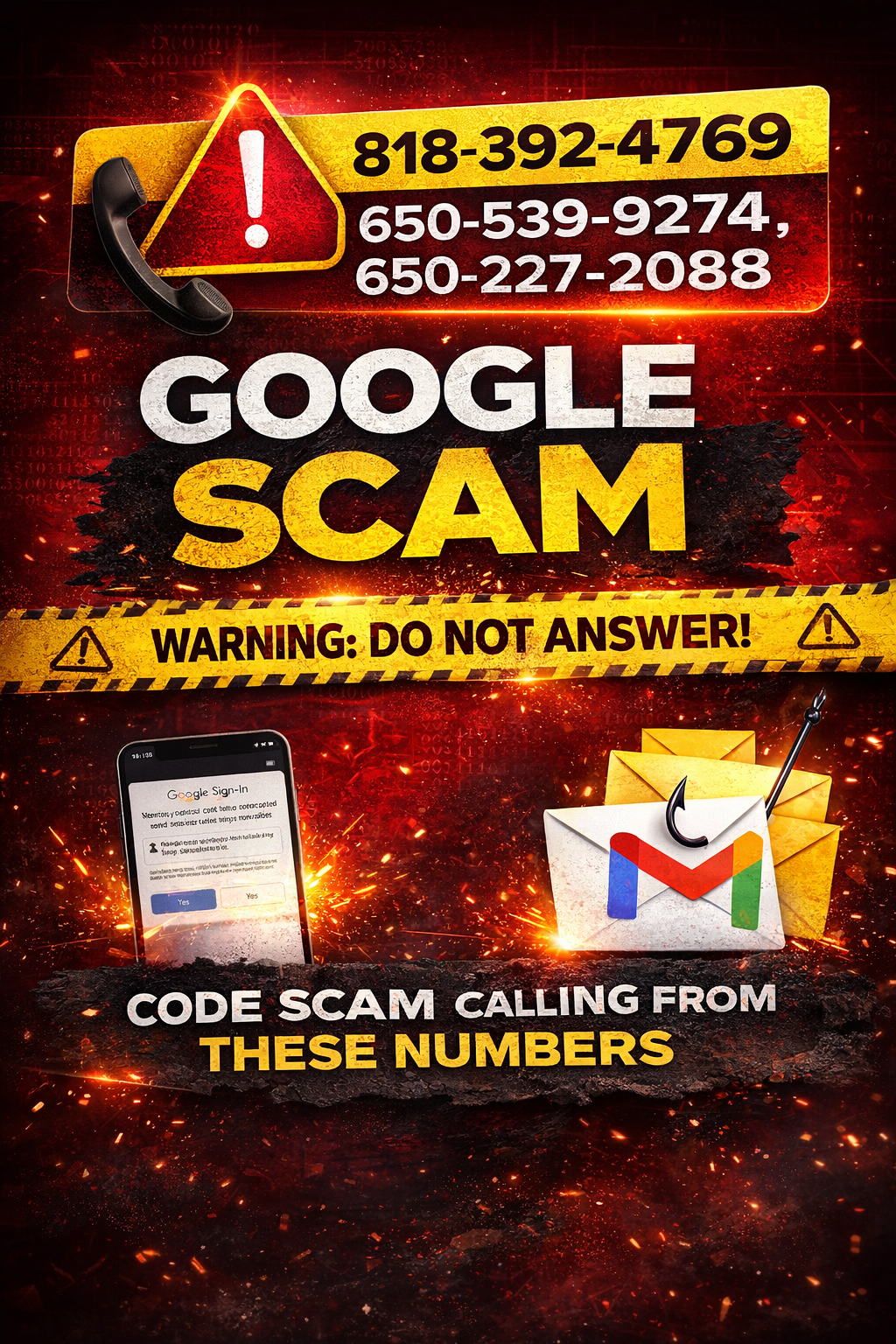
If you searched 818-392-4769, 650-539-9274, or 650-227-2088 - google account scam
READ THIS: Google Account Scam
If you received a verification code first , followed by a call from:
- 818-392-4769
- 650-539-9274
- 650-227-2088
Claiming to be from Google account security , 👉 this is a scam attempt to take over your account.
If someone calls claiming to be from Google, Microsoft, or Apple about your account —👉 it’s 100% a scam.
What Actually Happens: The Real Flow of This Scam
This is the exact sequence they use:
- You receive a random verification code (via email or phone).
- Minutes later, you get a call from 818-392-4769, 650-539-9274, or 650-227-2088 .
- The caller says:
- “Someone initiated account recovery using your ID (front and back).”
- “Have you been a victim of identity theft?”
- They claim:
- “We’re calling to protect your account.”
👉 They are the attacker.
They Read From a Script
- They sound confident and professional.
- They follow a script word-for-word .
- If you interrupt them, they often keep reading the script .
👉 This is a huge red flag.
The Trap: Approval Request
After the call starts, they will say:
“We’re going to send you a code or a pop-up — please approve it so we can secure your account.”
At the same time, 👉 you receive a real login prompt or code .
This is NOT protection. 👉 This is them trying to log into your account .
NEVER DO THIS
- NEVER approve a login you did not initiate.
- NEVER share verification codes with anyone.
- NEVER trust someone calling you claiming to be support.
👉 If you approve it, you give them access .
Numbers Being Used in This Scam
These numbers have been used:
People search:
- “818-392-4769 Google scam”
- “650-539-9274 is this Google?”
- “650-227-2088 scam call”
👉 If you found this page from those searches, you were targeted.
They May Also Send Emails to Trick You
While on the call, they may:
- Send emails that look like they are from Google.
- Tell you: “Check your spam or junk folder.”
Fraudulent emails may state that a “dedicated representative” has been assigned to your Google account. Scammers use this tactic to appear legitimate and build trust before attempting to gain access through verification prompts.
Major red flag: Real Google security alerts do NOT rely on spam folders during a “support call.”
They may claim:
- A recovery request was submitted.
- Someone uploaded ID documents.
- You have a “case number” or “representative.”
👉 All fake. Designed to scare you.
How to Protect Yourself
Here are some steps you can take to protect yourself:
- Press NO on any login you didn’t start.
- Hang up immediately.
- Do NOT engage.
- Change your password.
- Check your account activity.
- Use Authenticator apps or Passkeys .
- Remove SMS login options.
Why This Scam Works
They combine:
- Real verification codes.
- Real login prompts.
- Fake phone calls.
- Psychological pressure.
👉 It feels real — that’s why people fall for it.
818-392-4769 is NOT Google. 650-539-9274 is NOT Google. 650-227-2088 is NOT Google.
And again:
Microsoft will NEVER call you.
Apple Will NEVER call you.
Dell will NEVER call you.
HP will NEVER call you.
👉 They do NOT have time to “protect your account” by calling you. If they call, it’s the attacker .
Need Help Securing Your Accounts?
If you experienced this scam or want to lock down your accounts properly, we can help. Houston Tech Guys provides:
- Account security audits.
- Business IT protection.
- Malware & threat removal.
- Ongoing IT support.
Verify independently and respond to exposure
Treat phone numbers, sender names and amounts described here as details reported in the source case, not proof of who owns a number or who placed a call. Caller ID and email sender displays can be spoofed. Open the organization’s official app or type its known website yourself; use contact information obtained there, not from the message. Do not share passwords, recovery codes or unexpected sign-in approvals. If you shared access or credentials, disconnect an exposed device, use a different trusted device to change passwords and review sessions, and contact the affected bank or service promptly. Keep evidence and report the message. A suspicious message alone does not prove a device or account was compromised.